Introduction
In modern small and medium-scale mining operations, the core competitiveness no longer depends solely on raw resource reserves. Instead, it relies heavily on standardized, stable, and high-efficiency mineral processing workflows. Many field projects face common problems such as uneven particle classification, lost fine valuable particles, unstable separation results, and low overall recovery efficiency. These issues lead directly to reduced economic benefits and waste of mineral resources.
A scientific and complete processing workflow can significantly improve final recovery rates, stabilize concentrate quality, and reduce operational and maintenance costs. This article mainly introduces the standardized processing logic, workflow advantages, and core optimization principles suitable for global small-to-medium mining projects, providing practical references for project upgrading and new site construction.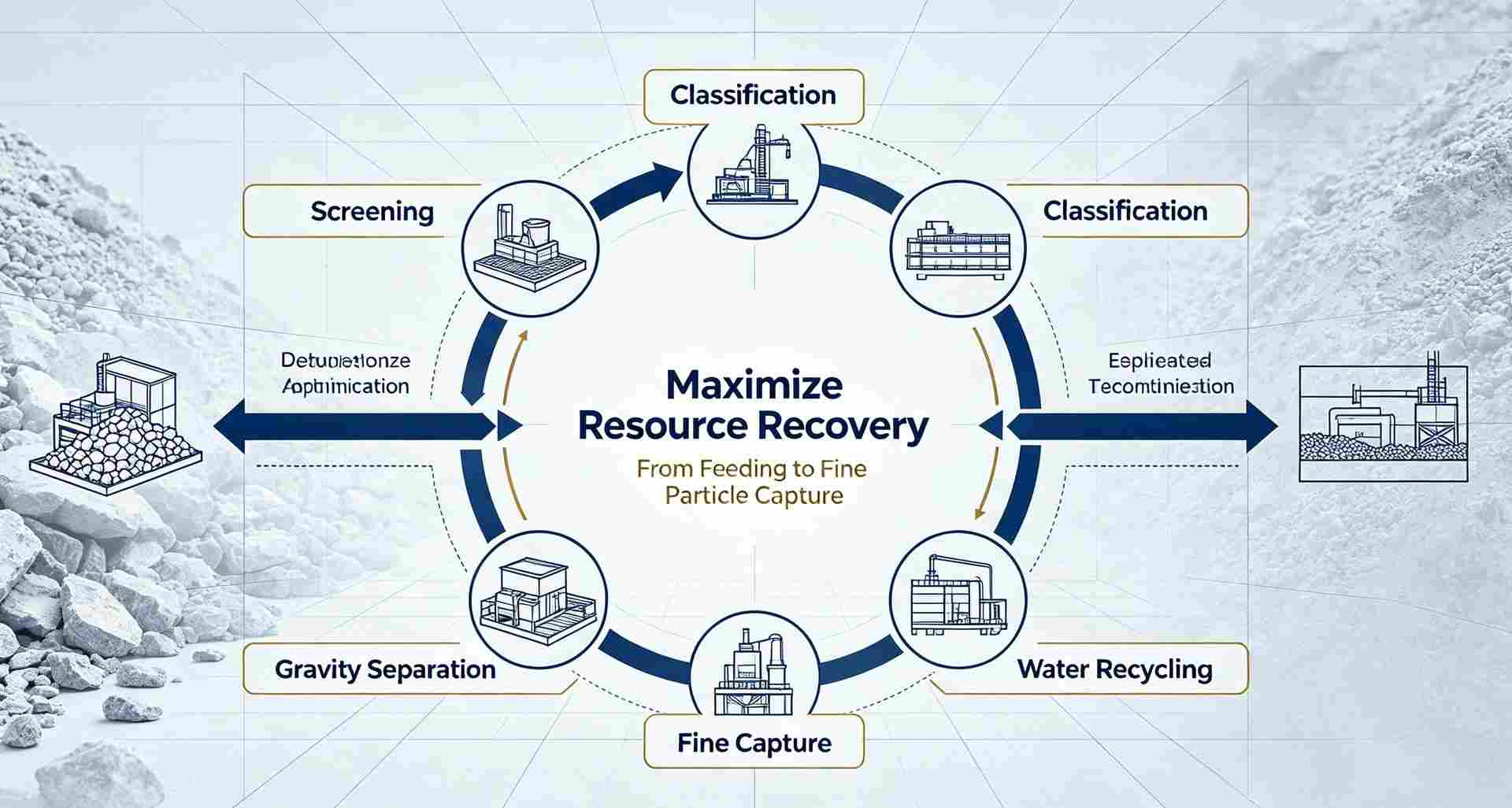
The Core Logic of Modern Mineral Processing
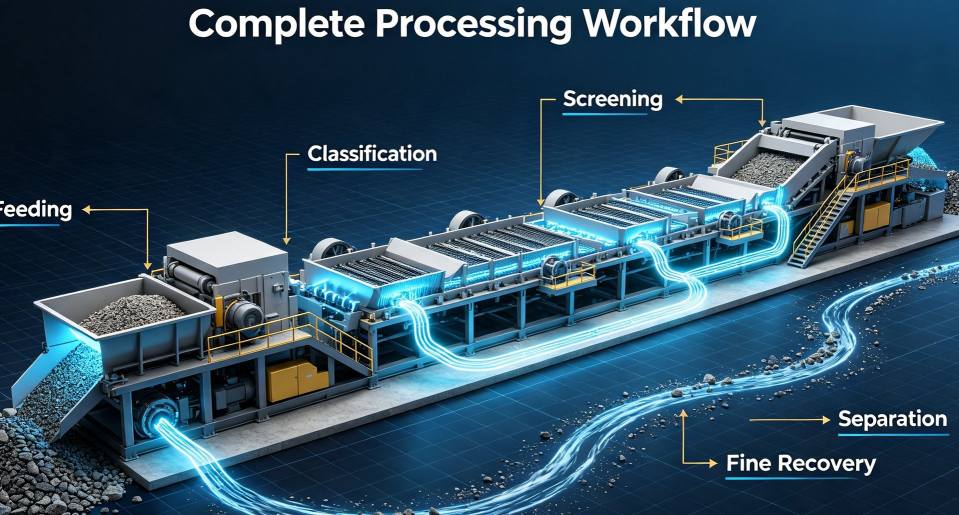
A mature mineral processing project always follows a fixed technical logic: staged particle size treatment → graded material separation → precise fine particle recovery. Every step is designed to classify materials according to physical differences, avoiding mixed processing of coarse and fine particles which causes resource loss.
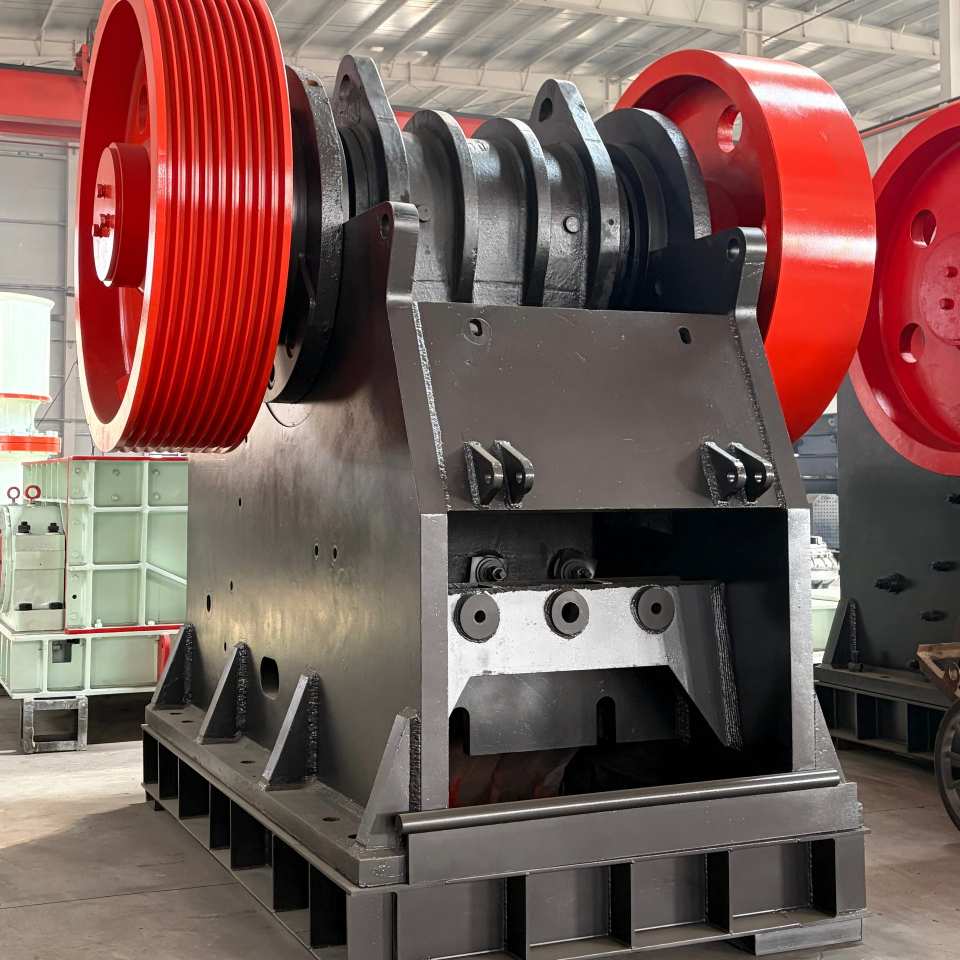
The first key stage is uniform particle size treatment. Raw materials from mining sites often contain large particle differences. Uncontrolled feeding will cause unstable separation pressure, reduce processing efficiency, and lead to valuable substance embedding in coarse waste materials. Standardized pre-processing can effectively control feeding particle size and create uniform conditions for subsequent separation.
The second core stage is graded screening and classification. Multi-layer precise classification divides materials into different particle size groups. Different particle sizes correspond to different separation methods, which is the key to improving overall recovery. Many old mining sites adopt single-stage processing, resulting in most fine valuable particles being washed away and unable to be effectively collected.
The final core stage is fine particle precise recovery. Fine-grained valuable materials are the most easily lost part in traditional mining. Modern processing systems add targeted fine particle capture links to maximize the utilization rate of mineral resources and greatly increase final output benefits.
Advantages of Standardized Modular Processing Workflow
Compared with traditional scattered and manually assisted processing methods, modern standardized modular processing workflows have obvious advantages for global small and medium mining projects, especially for remote sites, frequent relocation projects, and limited infrastructure areas.
First, the workflow is highly adaptable. It can be adjusted according to different material characteristics, site water conditions, and daily processing volume. It does not require fixed large-scale infrastructure transformation and can quickly match project requirements.
Second, the whole process is low energy consumption and high stability. The staged processing design avoids repeated invalid processing, effectively reduces energy waste, and ensures continuous and stable operation under long-term field working conditions.
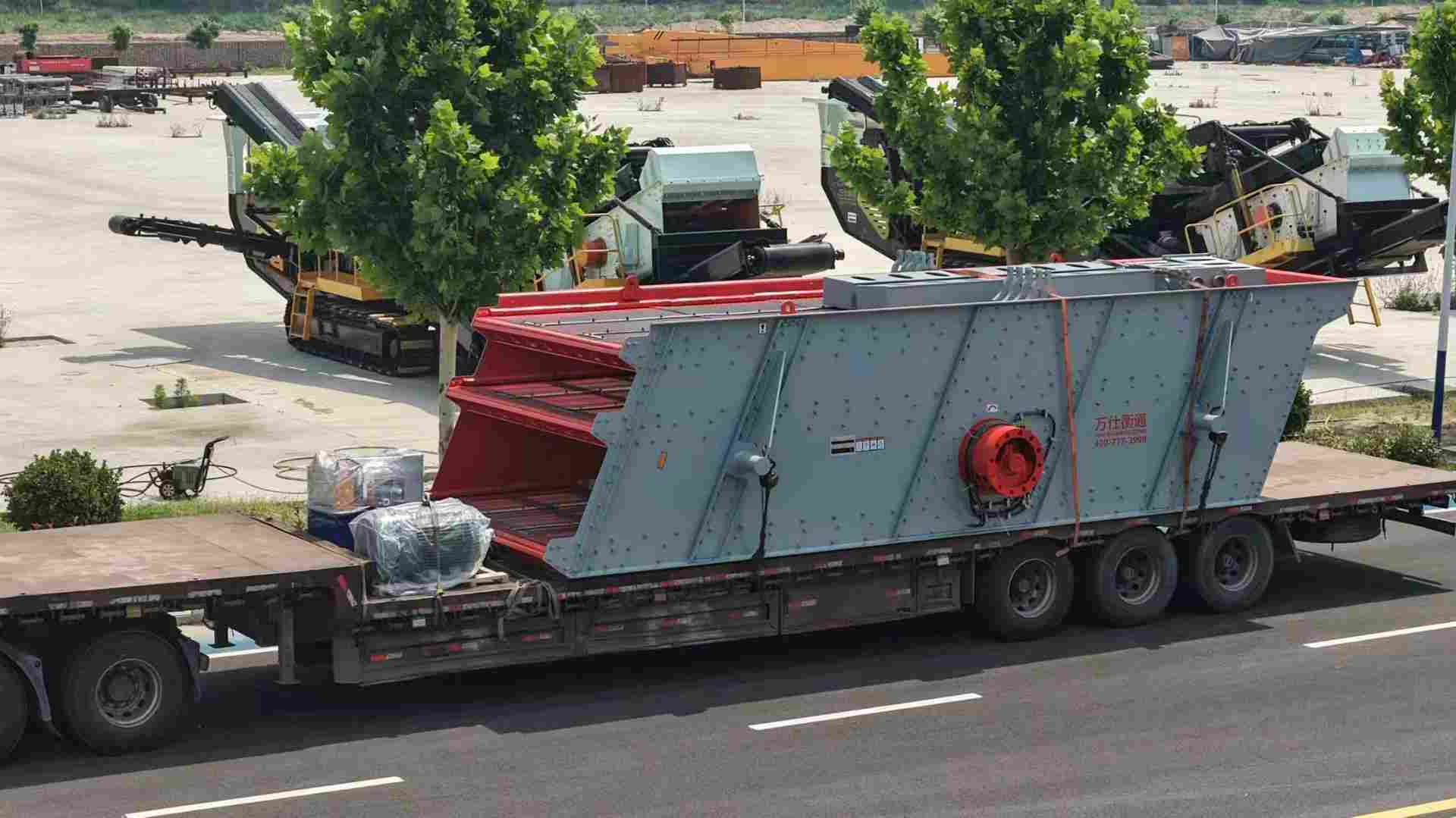
Third, the modular combination feature makes project construction faster. The whole processing system is divided into independent functional modules, which can be transported, assembled and debugged quickly, greatly shortening the project investment cycle and enabling customers to obtain returns faster.
Key Points to Improve Mining Recovery Efficiency
For most small and medium mining projects, the recovery rate can be effectively improved through three key optimization methods without large-scale investment transformation.
First, optimize feeding uniformity. Controlling the maximum feeding particle size and ensuring uniform feeding is the premise of stable separation. Excessive particle size fluctuation will directly cause separation system overload and fine particle loss.
Second, implement multi-stage graded separation. Rough separation captures large-volume valuable materials, and precise separation recovers fine particles. The two-stage cooperation can avoid resource loss caused by single rough processing.
Third, optimize fine particle capture links. Fine-grained valuable substances have low settling speed and are easy to lose with water flow. Targeted fine particle recovery settings can effectively solve the problem of low fine material recovery in traditional processes.
Conclusion
The improvement of modern mining economic benefits is essentially the improvement of processing workflow and resource utilization efficiency. A scientific, standardized and modular processing system can help small and medium mining projects achieve stable operation, higher recovery rate and lower operating cost.
If you want to optimize your existing mining workflow or get a customized processing solution according to your site conditions and processing capacity, you can send us your project parameters for professional technical guidance.