How to Match Jaw & Cone Crusher for Hard Rock Quarry
Published: 2026 | Industry: Hard Rock Aggregate Quarry, Primary & Secondary Crushing Circuit, Jaw + Cone Plant Design
Introduction
Jaw crusher + cone crusher forms the standard two-stage compression crushing circuit for hard rock quarries (granite, basalt, diabase, quartzite, compressive strength >180MPa). Unlike impact crushers, this combination relies on compression & laminated crushing to cut wear cost and produce cubical aggregate.
Many quarries suffer frequent blockages, low throughput, uneven liner wear and poor product grading due to mismatched jaw and cone models. All principles, parameters and matching rules below follow global mining crushing engineering standards and verified site operation data, without theoretical exaggeration.
Core matching target: Balanced system capacity, suitable feed top size for cone, reasonable reduction ratio, stable continuous operation and minimum over-crushing.
1. Role Division: Understand Core Function Difference
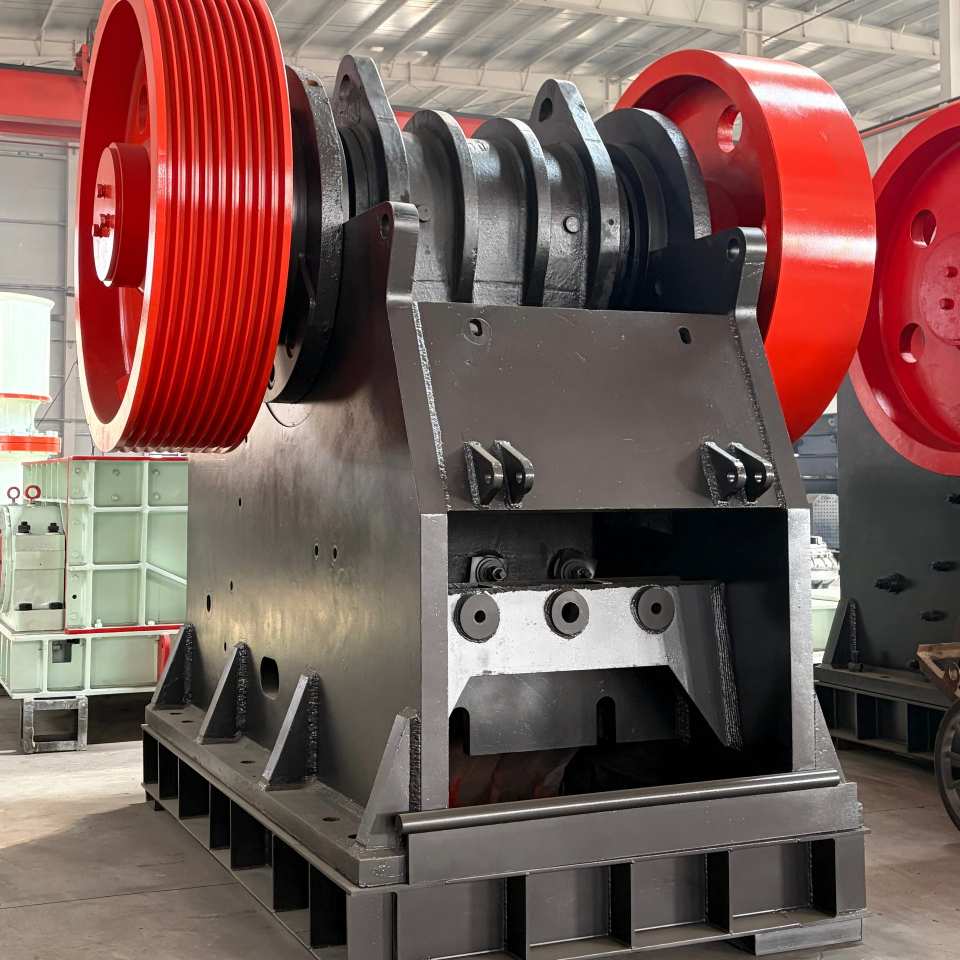
Primary Jaw Crusher: Receive blasted large rock directly from quarry face.
- Accept large irregular feed lump; typical max feed size: 500–1100 mm
- Target: Reduce run-of-mine rock to suitable feed size for cone crusher
- Typical reduction ratio: 3 : 1 ~ 4 : 1
- Limited maximum feed lump; cannot handle oversized block directly
- Laminated crushing improves particle shape, lower wear on hard abrasive rock
- Typical reduction ratio: 3 : 1 ~ 5 : 1
Rule: Never reverse the sequence. Cone cannot work as primary crusher for raw blasted quarry rock.
2. Feed Size Matching — The Most Critical Rule
The single biggest reason for cone stall, bridging and uneven mantle wear is oversized material from jaw crusher.
- Engineering standard: The 80% passing size of jaw discharge (P80) ≤ 65% of cone feed opening width.
- Simple field rule: Maximum lump from jaw should not exceed 70–75% of cone feed opening.
- Adjust jaw closed side setting (CSS) to control top size output before feeding cone.
- If jaw produces excessive oversize lump, install scalping screen between jaw and cone to remove oversize.
Example: Cone feed opening = 250 mm → maximum allowable lump from jaw: ≤175–185 mm. If jaw output contains frequent 200mm+ rocks, cone will continuously block.
3. Capacity Matching Principle
Do not select jaw and cone with identical nominal hourly capacity. Always reserve buffer to avoid cone being bottlenecked.
- Recommended capacity relation: Jaw nominal capacity = Cone nominal capacity × 1.15 ~ 1.20
- Jaw needs extra capacity to absorb feed fluctuation from quarry blasting and loader operation.
- Install surge hopper / buffer stockpile between jaw discharge and cone feed. This decouples two machines; short-time jaw maintenance will not immediately stop cone production.
- Conveyor, vibrating feeder under surge bin must match cone maximum throughput.
Warning mistake: If cone capacity > jaw capacity, cone often runs partially empty, unstable chamber filling, poor particle shape and increased liner wear.
4. Reasonable Reduction Ratio Distribution
Total reduction ratio = Raw feed max size ÷ Final aggregate P80 size. The load must be shared reasonably between jaw and cone.
Standard two-stage distribution for hard rock:
- Jaw crusher undertake 60% ~ 65% of total size reduction
- Cone crusher undertake remaining 35% ~ 40%
Two typical bad scenarios:
1. Jaw CSS set too wide → oversized feed to cone, cone forced to take heavy reduction load, frequent blockage and fast liner wear.
2. Jaw CSS set too narrow → jaw capacity drops sharply, whole plant becomes jaw-limited bottleneck.
5. Choose Correct Cone Chamber Profile
After confirming jaw model, select cone cavity profile according to jaw discharge size and final product demand:
- Standard / Medium cavity cone: Best match for primary jaw output. Large feed opening, suitable for secondary crushing, produce 20–63mm aggregate.
- Short head fine cavity cone: Not recommended directly after jaw. Designed for tertiary crushing with smaller feed size; easily blocked by coarse jaw discharge.
Single cylinder hydraulic cone: Preferred for medium & small scale quarries, simple maintenance.
Multi-cylinder hydraulic cone: Preferred for large high-throughput hard rock quarries, higher crushing force, better cubical aggregate.
6. Recommended Crushing Circuit Layouts
Layout A: Open Circuit (Small temporary quarry)
Loader → Vibrating Feeder → Jaw Crusher → Conveyor → Cone Crusher → Vibrating Screen → Finished stockpile
Disadvantage: Unstable particle gradation, contains oversize. Only for low-standard construction stone.
Layout B: Closed Circuit (Standard formal hard rock quarry — Highly Recommended)
Raw rock → Feeder + Grizzly scalper → Jaw Crusher → Surge bin → Cone Crusher → Vibrating Screen
Screen oversize return back to cone feed for re-crushing.
Advantage: Stable finished size, low flakiness index, meets highway, concrete aggregate standard.
Important accessory: Install grizzly scalper on jaw feeding hopper to remove fine soil and undersize rock before entering jaw cavity, reduce jaw liner wear.
7. Top Common Matching Mistakes on Quarry Sites
- ❌ Oversized lump from jaw fed directly into cone, causing bridging and stall.
- ❌ Cone nominal capacity smaller than jaw, forming permanent system bottleneck.
- ❌ Using short-head fine cone directly after jaw without intermediate screening.
- ❌ No surge bin between jaw and cone; any jaw stop immediately empties cone feed.
- ❌ Ignore scalping; clay and fine powder enter crushing cavity and accelerate liner abrasion.
- ❌ Set jaw CSS too small to reduce top size, sacrificing overall plant throughput.
- ❌ Design open circuit when high-quality cubical aggregate is required.
- ❌ Select model only by purchase price without calculating total wear part lifecycle cost.
8. Practical Jaw + Cone Matching Reference Cases (Granite Quarry)
| Target Capacity | Jaw Model | Matched Cone Model | Remarks |
|---|---|---|---|
| 80–120 t/h | PE600×900 | Single cylinder CH430 | Small & medium quarry, closed circuit |
| 180–260 t/h | PE900×1200 | Multi-cylinder HP300 | Popular medium scale aggregate line |
| 300–420 t/h | C120 / PE1000×1200 | HP400 / CH660 | Large permanent quarry for highway aggregate |
Note: All combinations must adjust CSS and feeding rate after commissioning according to actual rock hardness and blasting fragment size.
Frequently Asked Questions
Q1: Can I run jaw and cone without closed circuit screening?
A: Only acceptable for low-grade filling stone. For commercial concrete and road aggregate, closed circuit is mandatory to control particle shape and oversize content.
Q2: What if raw rock contains high clay and moisture?
A: Install grizzly and washing system before jaw. Wet sticky fines easily cause cone cavity blockage.
Q3: Is mobile jaw + mobile cone matching rule same as stationary plant?
A: The feed size and 15–20% capacity buffer rule remain identical. Mobile sets still need surge control and avoid direct uncontrolled feeding between units.
Q4: How to judge if jaw and cone are well matched during operation?
A: Stable continuous cone cavity filling; no frequent stall; low flakiness; jaw does not run always at maximum overload; screen oversize volume remains steady.
Conclusion
Successful jaw and cone matching for hard rock quarries depends on four core factors: controlled cone feed top size, balanced system capacity with buffer, proper reduction ratio sharing and suitable cone crushing chamber selection. Equipment model selection cannot rely only on catalogue data; blasting fragmentation, rock hardness, moisture and final aggregate specification must all be considered.
Before final plant investment, complete site sampling and crushing simulation are recommended. We can provide customized flow layout and equipment quotation based on your target hourly output and raw rock conditions.