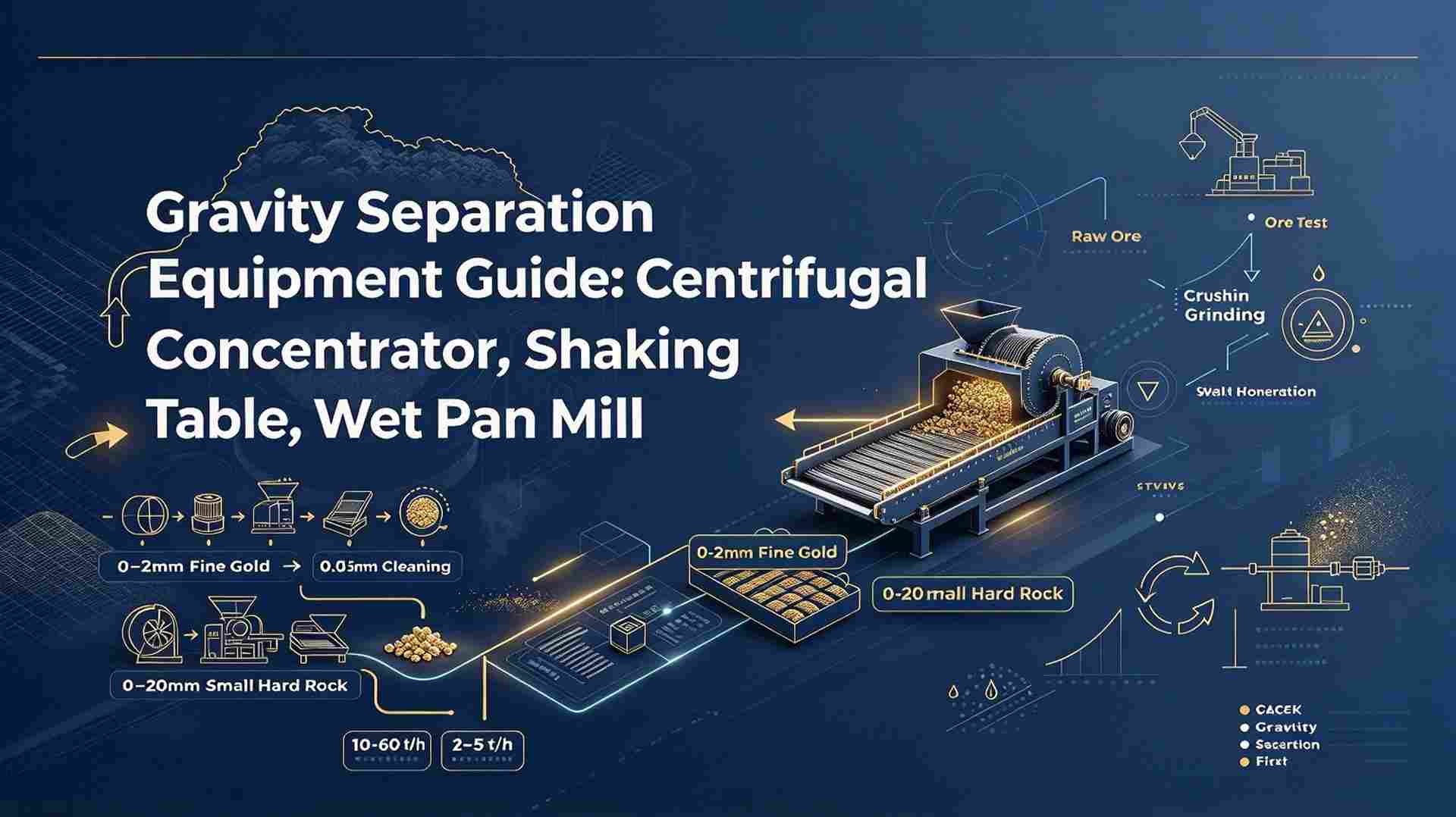
Gravity separation remains the most cost-effective gold beneficiation method for overseas mines, especially for small gold projects in Africa. Centrifugal concentrator, shaking table and wet pan mill are three core gravity devices widely used in placer gold and hard rock gold circuits. Many mine owners confuse their functions and misuse the machines, resulting in poor fine gold recovery. This guide explains working principle, suitable ore type, capacity, advantages & limitations for each unit.
1. Core Comparison Table
| Item | Centrifugal Gold Concentrator | Shaking Table | Wet Pan Mill |
|---|---|---|---|
| Core Function | Capture fine & flour gold, rough concentration | Cleaning & upgrading gold concentrate | Grind ore + amalgamation for free gold |
| Feed Size | 0 ~ 2mm | 0 ~ 0.5mm | 0 ~ 20mm |
| Typical Capacity | 10 ~ 60 t/h | 0.3 ~ 2 t/h per table | 1 ~ 5 t/h per mill |
| Best For | Placer gold, fine free gold recovery | High-grade rough concentrate cleaning | Small hard rock gold mines, replace ball mill |
| Gold Recovery Feature | Excellent for fine gold down to 200 mesh | High concentrate grade, low throughput | Good for coarse free gold; poor for ultra-fine gold |
2. Equipment Introduction & Application Scenarios
Centrifugal Gold Concentrator
Centrifugal concentrator uses high centrifugal force to amplify gravity difference between gold and gangue minerals. Gold particles stick to the concentrate lining while light sand overflows as tailings. It is widely installed after trommel screen in placer gold washing plants.
- ✅ Pros: High recovery for fine gold, compact structure, easy to operate, continuous feeding
- ❌ Cons: Periodic concentrate cleaning required; liner wear needs regular replacement
- Recommended position: Main rough concentration unit in placer gold processing flow
Shaking Table
Shaking table separates minerals by combined action of table vibration and water film. The heavy gold concentrate forms a narrow strip on table surface, while tailings flow away. It is a typical cleaning equipment rather than bulk roughing machine.
- ✅ Pros: High concentrate grade, visible separation effect, easy manual monitoring
- ❌ Cons: Very low single unit capacity, large floor space for multi-table setup
- Recommended position: Final upgrading after centrifugal concentrator or wet pan mill
Wet Pan Mill (Gold Pan Mill)
Wet pan mill relies on rolling grinding wheels to crush and grind gold ore. It is a popular low-cost grinding alternative for small hard rock gold mines with limited budget, commonly used together with mercury amalgamation in Africa small gold sites.
- ✅ Pros: Low investment, simple structure, easy maintenance, small power consumption
- ❌ Cons: Not suitable for large capacity lines; poor grinding fineness for ultra-fine disseminated gold
- Recommended position: Small hard rock gold, replace ball mill for 1~5TPH projects
3. Typical Combined Gravity Separation Circuits
- Placer Gold Flow: Trommel Screen → Centrifugal Concentrator → Shaking Table (final cleaning)
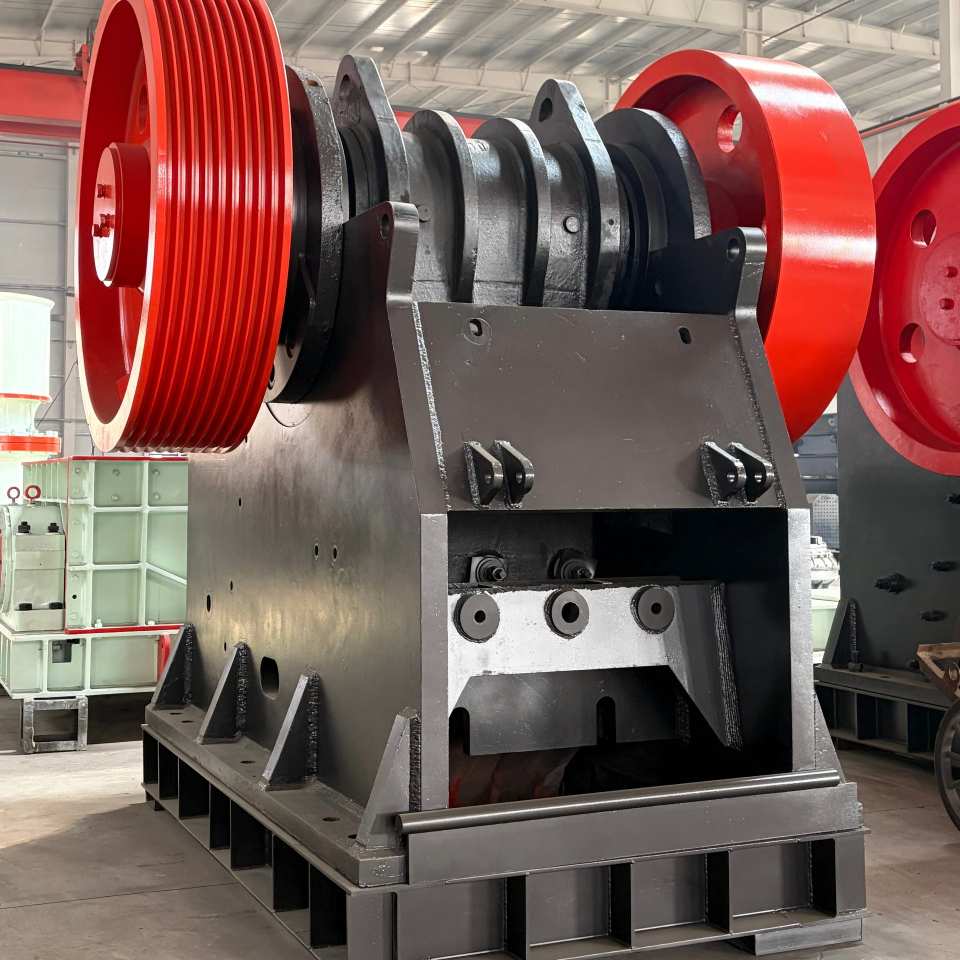
- Small Hard Rock Gold Flow: Jaw Crusher → Wet Pan Mill → Centrifugal Concentrator → Shaking Table
Important reminder: Wet pan mill is for small-scale projects. For above 10TPH hard rock ore, ball mill + classifier is more stable than wet pan mill.
FAQ
Q1: Can shaking table work as primary roughing equipment?
A: Not recommended. Its throughput is too low for bulk ore processing. Use centrifugal concentrator for roughing and shaking table only for concentrate cleaning.
Q2: Is wet pan mill suitable for placer gold?
A: Generally no. Placer gold is already liberated. You do not need extra grinding; directly use centrifugal concentrator and shaking table.
Q3: Which machine gives the highest gold recovery for fine gold?
A: Centrifugal gold concentrator performs best for fine gold particles, much better than wet pan mill alone.
Get Custom Gravity Separation Solution
Send your ore sample report, processing capacity and site conditions. Our mineral processing engineers select matched gravity separation equipment and design full flow sheet.