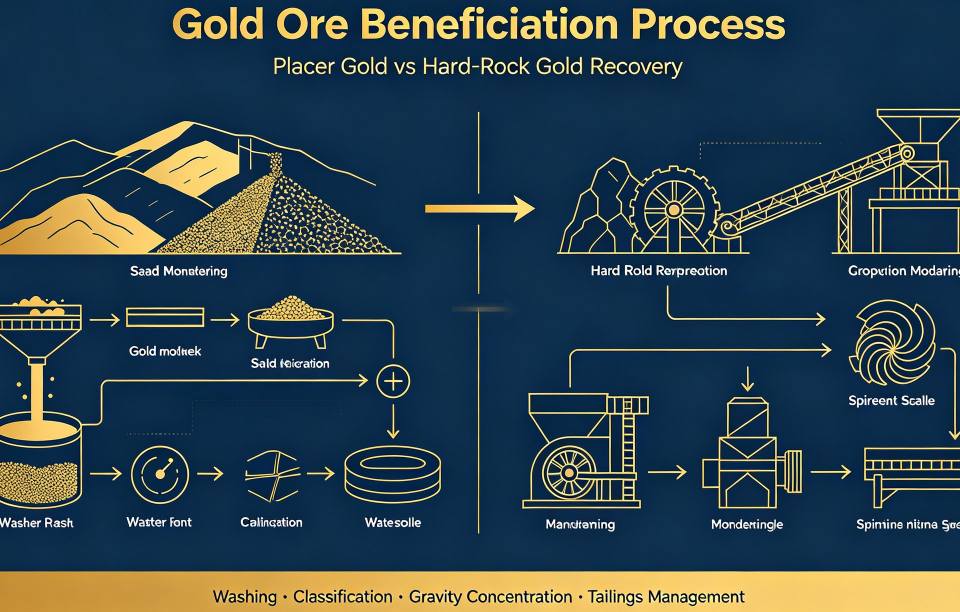
Gold Ore Beneficiation Process: Placer VS Hard‑Rock Gold Recovery
Gold ore is mainly divided into two major deposit types: placer (alluvial) gold and hard‑rock (lode) gold. Their processing ideas, workflow and core constraints are completely different. Understanding your ore property is the first step to build a stable and profitable mining project.
Many small‑mine operators suffer low gold recovery not because of poor‑quality ore, but because they adopt unsuitable process routes without ore analysis.
1. Placer (Alluvial) Gold Ore Processing
Placer gold particles have already been liberated by long‑term natural weathering and water erosion. Gold exists as free gold grains, flakes or nuggets mixed in gravel, sand and clay. No heavy crushing work is required.
Core workflow logic
- Washing & sizing pretreatment Remove sticky clay, separate large waste rock from gold‑bearing fine fraction. Clay agglomerates must be fully dispersed, otherwise fine gold will be wrapped and lost with tailings.
Key point: If raw material carries heavy sticky clay, sufficient washing and disintegration is critical.
- Gravity rough concentration Take advantage of large density difference between gold and gangue mineral. Recover coarse and medium free gold through gravity separation.
- Fine‑gold upgrading & cleaning Rough gold concentrate from previous step needs further cleaning to increase gold grade. Fine gold particles that missed rough concentration should be captured in this stage.
- Tailings discharge
Main influencing factors for placer gold
- Clay content in raw ore
- Gold particle size distribution (nugget, medium gold, flour fine gold)
- Feed hourly capacity
- Water supply condition
Placer gold project risk: Fine flour‑gold loss is the most common problem. Process should be designed to target fine‑gold capture if your mine contains lots of tiny gold flakes.
2. Hard‑Rock (Lode) Gold Ore Processing
Gold is locked inside rock matrix. Gold particles cannot be separated until host rock is crushed and ground. Hard‑rock processing is more complex and power‑consuming compared with placer gold projects.
Core workflow logic
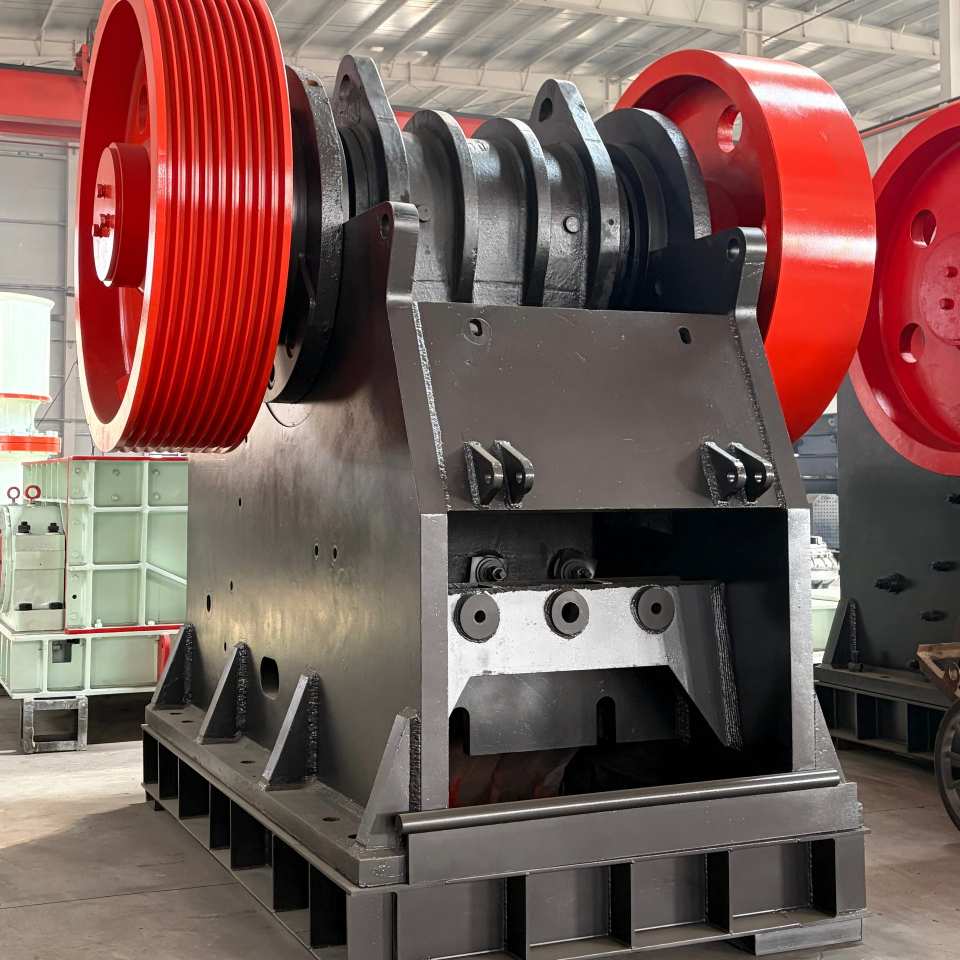
- Crushing stage Reduce large run‑of‑mine rock into small particle size, prepare feed for grinding circuit.
- Grinding & classification Grind crushed ore into fine slurry, fully liberate gold from rock. Classification separates qualified fine slurry; over‑size coarse particles return back for re‑grinding.
This liberation step determines your maximum possible gold recovery. If gold is still locked inside rock grains, no separation method can collect it.
- Concentration & separation According to ore characteristics, adopt gravity separation, flotation or combined process:
- Gravity separation: collect free coarse gold.
- Flotation: collect gold associated with sulfide minerals such as pyrite.
- Further treatment for concentrate Gold concentrate can go to leaching circuit for further extraction, or be sold as high‑grade concentrate product.
- Tailings disposal
Main influencing factors for hard‑rock gold
- Gold occurrence form: free gold or gold locked inside sulfide rock
- Required grinding fineness for gold liberation
- Ore hardness and abrasiveness
- Hourly throughput target
3. Placer Gold VS Hard‑Rock Gold Quick Comparison
| Item | Placer / Alluvial Gold | Hard‑Rock / Lode Gold |
|---|---|---|
| Gold status | Gold already liberated by nature | Gold locked inside rock, need crush & grind |
| Main difficulty | Clay removal, prevent fine gold loss | Gold liberation via fine grinding |
| Power consumption | Low | High |
| Key control point | Washing effect | Grinding fineness |
4. Important Tips Before Building Your Gold Processing Circuit
- Ore sample test is strongly recommended Mineral testing tells you gold grain distribution, liberation condition and impurity composition. Process solution should base on ore test result instead of copying other mine’s flow directly. Same‑looking mines may behave totally different.
- Define your real target capacity Distinguish raw ore feed capacity vs concentrate output. Many project misunderstandings come from mixed‑up capacity definition.
- Water resource assessment Almost all gravity gold recovery consumes large volume of process water. Evaluate local water source before project design.
- Distinguish rough concentration and final cleaning Rough concentration captures most gold; cleaning improves concentrate grade. Do not expect one single separation step to get high‑purity finished gold.
FAQ
Q1: Can I use placer gold process for hard‑rock ore? A: No. Hard‑rock gold is enclosed in rock. Without crushing and grinding, gold particles cannot be released, and gravity separation will get very low recovery.
Q2: My recovery rate is low, what should I check first? A: First check whether gold is fully liberated. For placer ore, check clay dispersion and fine‑gold loss.
Q3: What information is needed for process suggestion? A: Ore type (placer or hard‑rock), ore sample test report if available, target hourly capacity, gold particle size feature, local water condition.
Closing
Every gold deposit has its own unique features. There is no universal one‑size‑fits‑all gold‑processing workflow. Proper process design based on your real‑mine condition will reduce operating cost and maximize gold output.
Share your mine information, we can give you professional process reference.
Hashtags for social sharing #goldore #goldprocessing #hardrockgold #placergold #mineralbeneficiation #goldmining #gravityseparation